
Key terms in this article
What is Making Tax Digital for Income Tax?
Making Tax Digital for Income Tax (MTD for ITSA) is HMRC’s new way to do Self Assessment for sole traders and landlords. From 6 April 2026, those with qualifying income above £50,000 must keep digital records, send quarterly updates to HMRC through compatible software, and still submit a year-end Self Assessment tax return by the usual 31 January deadline.
What is qualifying income?
Qualifying income is the gross income, before expenses, from self-employment and property combined. The £50,000 threshold is total turnover, not profit. A sole trader with £55,000 of takings and £20,000 of expenses is in scope from April 2026.
What is HMRC-compatible software?
HMRC-compatible software is any application that HMRC has approved to submit quarterly MTD updates and the year-end declaration. Xero, QuickBooks, Sage and FreeAgent are all on the list, alongside specialist MTD bridging tools.
What Does MTD for ITSA Mean for Telecoms Resellers and Their Customers?
From 6 April 2026, more than 860,000 UK sole traders and landlords with qualifying income above £50,000 must keep digital records and submit quarterly updates to HMRC through compatible software (HMRC, 2026). For most telecoms resellers this is not about your own tax return. It is about the small-business customers you bill.
The threshold drops further in 2027 and again in 2028, pulling more sole traders into scope each year. If you sell to plumbers, electricians, hairdressers, lone consultants, single-engineer IT firms, small landlords or freelance video crews, a meaningful proportion of your customer base is in this bracket.
Key Takeaways
- MTD for ITSA goes live on 6 April 2026 for sole traders and landlords with qualifying income above £50,000 (GOV.UK, 2026)
- The threshold drops to £30,000 in April 2027 and £20,000 in April 2028
- Limited companies are out of scope; they stay on Corporation Tax rules
- Four quarterly updates are sent through software during the year; the year-end Self Assessment tax return is still due by 31 January
- HMRC requires the data to flow digitally end to end, not be retyped between systems
- Clear, consistent invoices with correct VAT make it easier for customers to record each one in their own software
- This is already covered for VAT-registered customers, but ITSA pulls in a much larger pool of sole traders
Who Has To File, and When
If a sole trader or landlord has qualifying income above £50,000 in 2024-25 (the assessment year HMRC is using to set the first cohort), they must start filing quarterly updates from 6 April 2026. The phased rollout looks like this:
- April 2026: qualifying income above £50,000
- April 2027: qualifying income above £30,000
- April 2028: qualifying income above £20,000
Partnerships are not yet in scope. Limited companies are not in scope at all under ITSA; they have their own MTD timetable for Corporation Tax that is still being developed.
For your reseller business: if you are a limited company, MTD for ITSA does not change anything for you directly. If your business is a sole trader or partnership, check whether your turnover puts you over the threshold. For your customers, the question is whether their main income comes through self-employment.
What Filing Looks Like in Practice
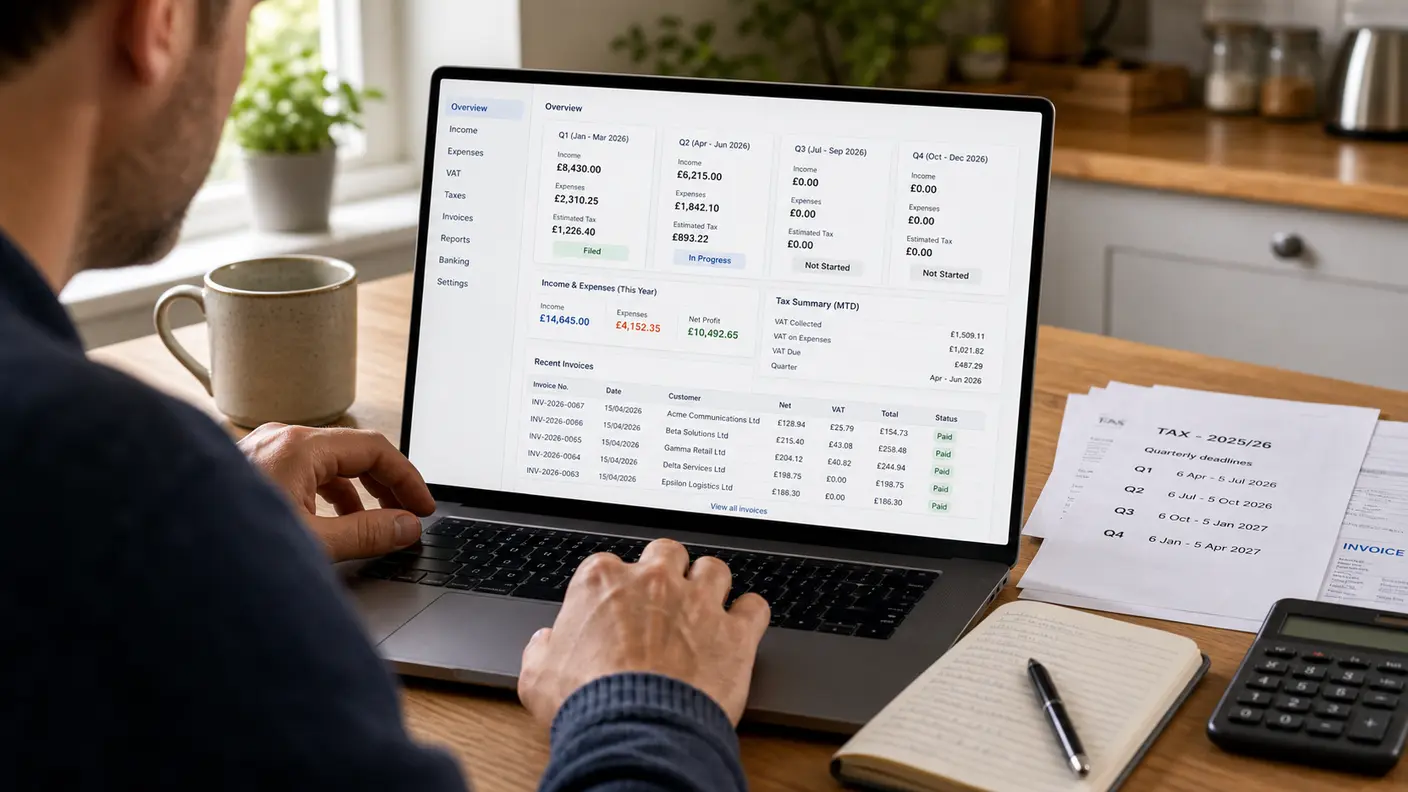
Sole traders in scope send four quarterly updates each tax year, with summaries of income and expenses by category, submitted digitally through software. The year-end Self Assessment tax return is still due by 31 January as it always has been; MTD changes how you get there, not the underlying return deadline.
The phrase “digital records” matters. Paper records are no longer enough. Spreadsheets are allowed only if they are linked digitally to the submission software, not retyped. For many sole traders, cloud accounting software that that does both the record-keeping and the filing.
What customers are likely to ask: whether your invoices will be easy to record in their accounting software. Clear, consistent invoices with correct VAT on each line are the practical answer.
Why This Is a Billing Software Conversation
A sole trader who has recorded supplier invoices in a spreadsheet now needs those records in, or digitally linked to, MTD-compatible software, so each supplier invoice has to be captured in a form that software can use.
Recording supplier invoices is quicker when each one is clear and consistent. A monthly recurring charge with the right VAT, the right category and the right reference makes reconciliation in the customer’s own cloud accounting quick rather than fiddly. Your recurring billing setup is what determines how those invoices look each month. The Xero integration keeps your own books in step with billing; it does not send invoices into customers’ accounting software.
For sole-trader customers specifically, the billingplatform.uk post on Xero for MTD-ready customers covers what SAFE’s Xero integration does and does not do. The short version: SAFE’s standard connector syncs your own books into your own Xero. Pushing each invoice into each end-customer’s separate Xero account is custom API work. Clean, machine-readable invoices that the customer can import easily into their own cloud accounting is the realistic value.
VAT MTD and ITSA MTD Are Not the Same Thing
A reminder that catches some people out. MTD for VAT has been in force in stages since April 2019 for businesses above the VAT threshold, and from April 2022 it has applied to all VAT-registered businesses regardless of turnover. ITSA is a separate regime, with its own quarterly cycle, its own threshold, and a different set of digital-record requirements.
A sole trader can be in scope for both (above the VAT threshold and above the ITSA threshold), in scope for ITSA only (between £50,000 and £90,000), or in scope for neither (below both). They are filed separately. The same software, in most cases, handles both.
Our UK telecoms compliance guide covers MTD for VAT and the wider compliance picture. This post focuses specifically on what ITSA adds.
What Resellers Can Do Through 2026
A short list.
Tell sole-trader customers, once, in writing. A short note saying “if you are a sole trader earning over £50,000, MTD for ITSA starts in April 2026, so talk to your accountant and consider cloud accounting software” is helpful and shows you are paying attention.
Make sure your invoices are clean. Correct VAT, clear line items, machine-readable PDFs with amounts and VAT laid out so they import cleanly into cloud accounting tools without manual rework.
Leave tax advice to accountants. MTD obligations sit with the customer, so point them to their accountant for anything beyond what your invoices provide.
Plan for the threshold drops. April 2027 brings in customers earning above £30,000. April 2028 brings in customers above £20,000. Each step brings more of your sole-trader customers into scope.
Frequently Asked Questions
Do I need MTD software as a telecoms reseller?
Most telecoms resellers are limited companies, so MTD for Income Tax Self Assessment does not apply to the reseller business directly. If your business is run as a sole trader, check whether your qualifying income exceeds the threshold (£50,000 from April 2026). MTD for VAT has applied to VAT-registered businesses since 2022 regardless of business structure, so you may already be using MTD-compatible software without thinking of it that way.
Which accounting software works for MTD ITSA?
HMRC publishes a regularly updated list of compatible software on GOV.UK. The main choices used by UK small businesses are Xero, QuickBooks, FreeAgent and Sage. All four handle both the quarterly updates and the year-end Self Assessment filing. Each has its own ways of capturing supplier invoices, and consistent invoices make that capture more reliable for a sole-trader customer who buys telecoms from you.
Does MTD for ITSA affect limited companies?
No. MTD for Income Tax Self Assessment applies to sole traders and landlords only. Limited companies file Corporation Tax, which has its own separate MTD timetable still under development. If your reseller business is a limited company, MTD for ITSA changes nothing for you directly. The relevance for limited-company resellers is in the sole-trader customers they bill, not in their own tax obligations.
How SAFE Billing Platform Helps
SAFE Billing Platform connects directly to Xero, and the Xero integration guide covers how transfer tasks send customers, invoices and payments into your own Xero account on the reseller side. The integration does not reach your customers’ accounting software. What your sole-trader customers get is clear, consistent invoices that they can record in their own Xero, QuickBooks, FreeAgent or Sage account ahead of each quarterly update. For common questions about MTD and billing, see our FAQ. If you want a walk-through against your own customer mix, the contact form is the quickest way in.